

About Rhizome Counselling
Approach
In an important sense, psychotherapy can be understood as a journey of accompaniment. This belief informs what I do not do as well as what I seek to do in my practice.
I will not try to fix you. I will not claim to know more about you than you do. I will not assume I know what is best for you or tell you what to do. I will not pretend to have all the answers. I will not promise I can make your suffering or sorrow disappear.
I will place all my professional resources — knowledge, skill, experience — at your disposal. I will seek to become a collaborator with you and a witness to the complexities of your story in the fullness of its pain and joy. I will go with you into dark places. I will believe you.
If this approach resonates with you, scroll down for more information about me and how we can connect.
About Kyle

Kyle Gingerich, PhD, MSW
As a psychotherapist I have the tremendous privilege of walking alongside survivors of sexual assault and intimate partner violence, the 2SLGBTQ+ community, first responders, veterans and serving members of the armed forces, and many others. I specialize in working with issues of trauma and PTSD, anxiety, depression, and relationship issues. I hold a Master of Social Work (MSW) degree and am a Registered Social Worker (RSW) with the British Columbia College of Social Workers, the Nova Scotia College of Social Workers and the Ontario College of Social Workers and Social Service Workers. I am a firm believer in life-long education and have additional specialized training in traumatic stress and dissociative disorders from the Trauma Research Foundation, which is led by world-leading trauma experts including Margaret Blaustein, Janina Fisher, Bessel van der Kolk, and others.
I spent over a decade working in education in teaching, advising, and leadership capacities from elementary through to the doctoral level and hold a number of other degrees including an MA and a PhD. I have always been intensely interested in questions of violence and peace and these interests continue to infuse my work in ever new and interesting ways.
As my own journey has wended its way through different therapeutic contexts, I’ve learned that the most significant transformations are often cultivated less by any specific method and more by the quality of the therapeutic relationship. I endeavour to bring this into my practice and see the cultivation of trust and safety not simply as a preamble or prelude to more “difficult” work but rather as the very essence of all the work I do.
I use a variety of methods including psychodynamic, narrative, and existential approaches, internal family systems (IFS), acceptance and commitment therapy (ACT), dialectical behaviour therapy (DBT), emotionally focussed therapy (EFT), the Gottman method, and others to craft an approach uniquely tailored for you, the challenges you’re facing, and the goals you’re seeking to reach.
What is a rhizome?
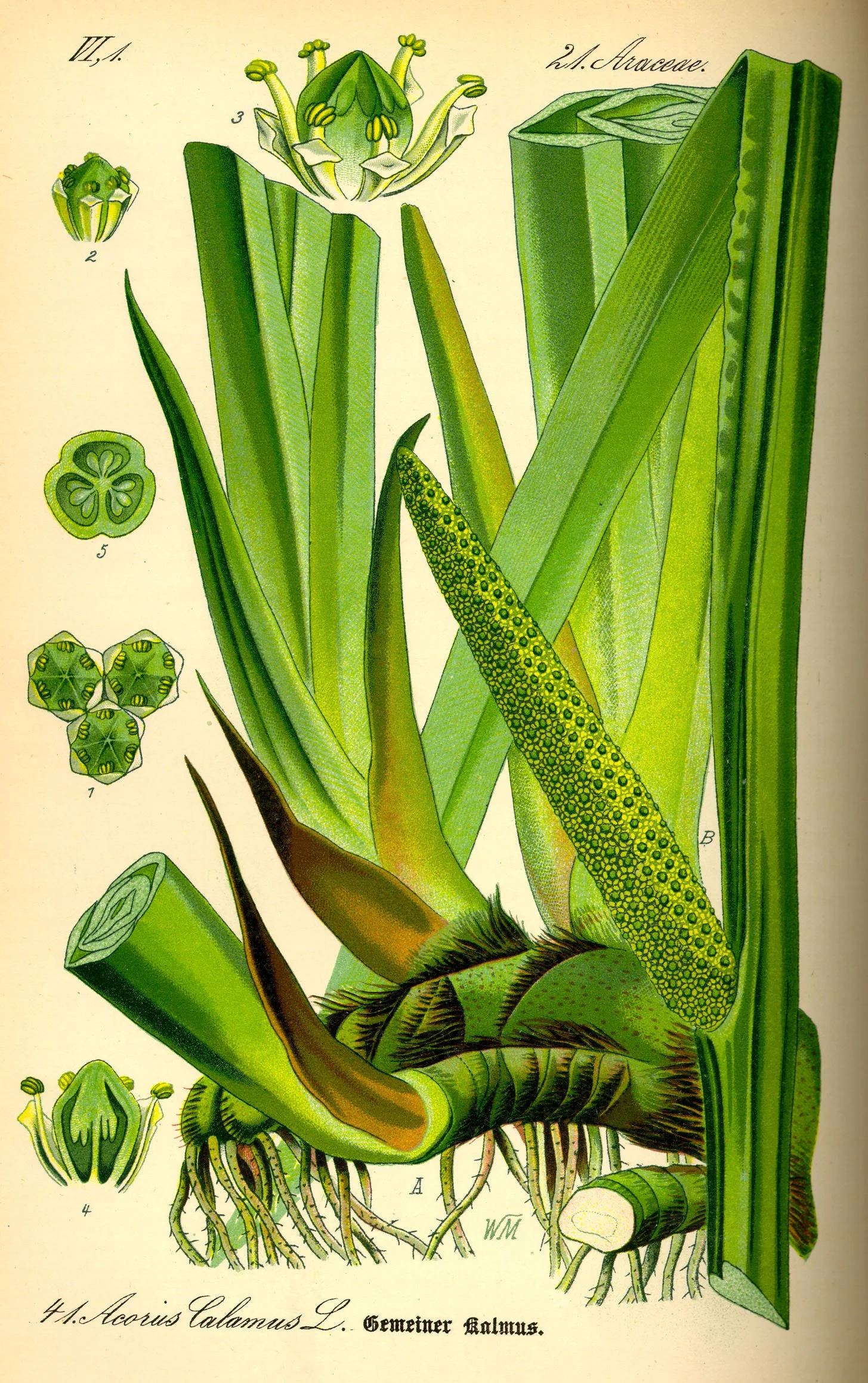
Keen gardeners and botanists may know that a rhizome is a horizontal stem that usually (but not always) grows just under the surface of the soil and sends out a profusion of roots and shoots from its interconnected nodes that often appear in unpredictable and far-flung places. The images at the top of each page of this website are examples of rhizomes: cala lily, aspen trees, wild peonies, bamboo, peace lily, mangrove trees.
Making an appearance in what may seem like a rather distant and unexpected place in the work of philosopher Gilles Deleuze and psychoanalyst Felix Guattari (1987), rhizomes are shown not to operate according to a linear or hierarchical logic but are rather characterized by interconnection, heterogeneity, and multiplicity. Understood this way, rhizomes cannot be traced back to a single point of origin, always have multiple entryways and exits, and while they can be broken, they will start up again and continue somewhere new.
What does any of this have to do with psychotherapy, you may be asking? I’ve discovered at least a few things in the thickets and atop the plateaus in the course of my work as a social worker and psychotherapist: there are many places to begin and many possible directions; everything is connected though these connections may not be readily apparent or expected; unsettling and wonderful surprises are possible; if one route is cut off or blocked there is usually another way, which isn’t to say the journey will be any less difficult; there is potential for (exponential) new growth that is often laying hidden just below the surface. I expect we may discover new lines of flight together or, perhaps, bump up against the limits of some of these in our work together.
In the end, for me the idea of the rhizome is less a concept or a metaphor and more about cultivating a space where peace with oneself, others, and the entire cosmos has the potential to flourish. Perhaps even a place of healing and repair of the kind that bell hooks (1994) and Judith Herman (2023) write about. At least this forms part of what I hope the work of psychotherapy might be.